Forum rules
The DIY forum is for personal projects (things that are not for sale, not in production), info sharing, peer to peer assistance. No backdoor spamming (DIY posts that are actually advertisements for your business). No clones of in-production pedals. If you have concerns or questions, feel free to PM admin. Thanks so much!
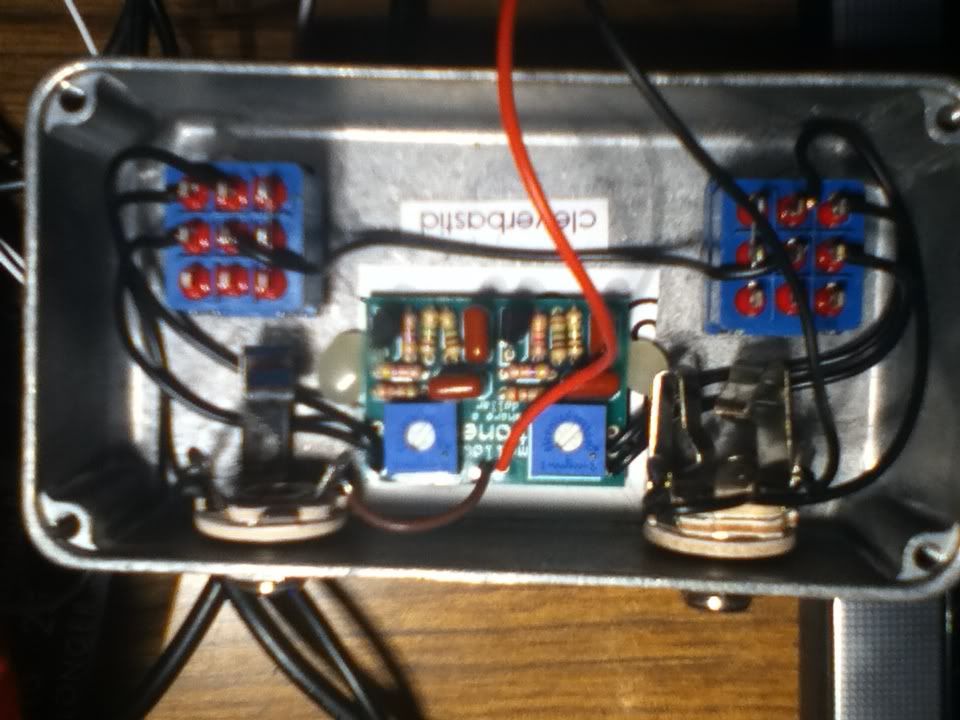
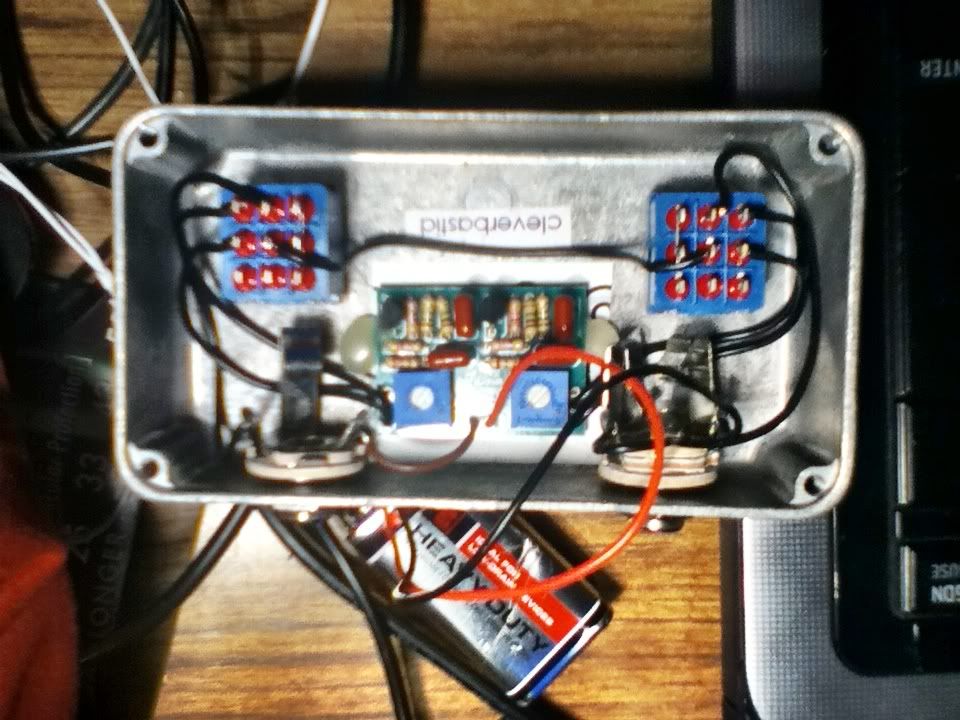
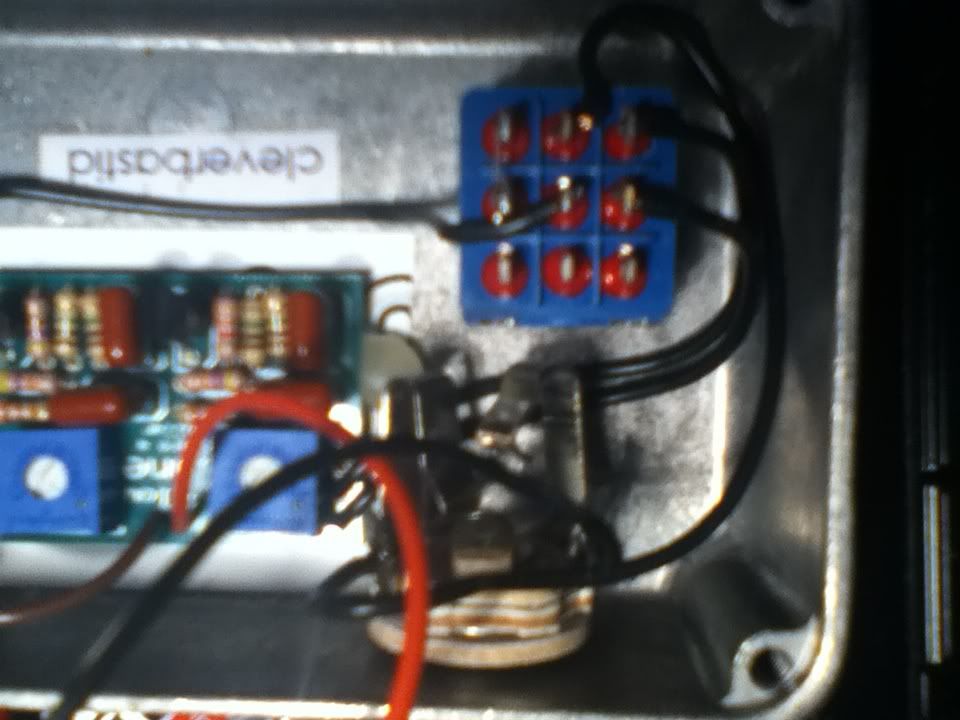
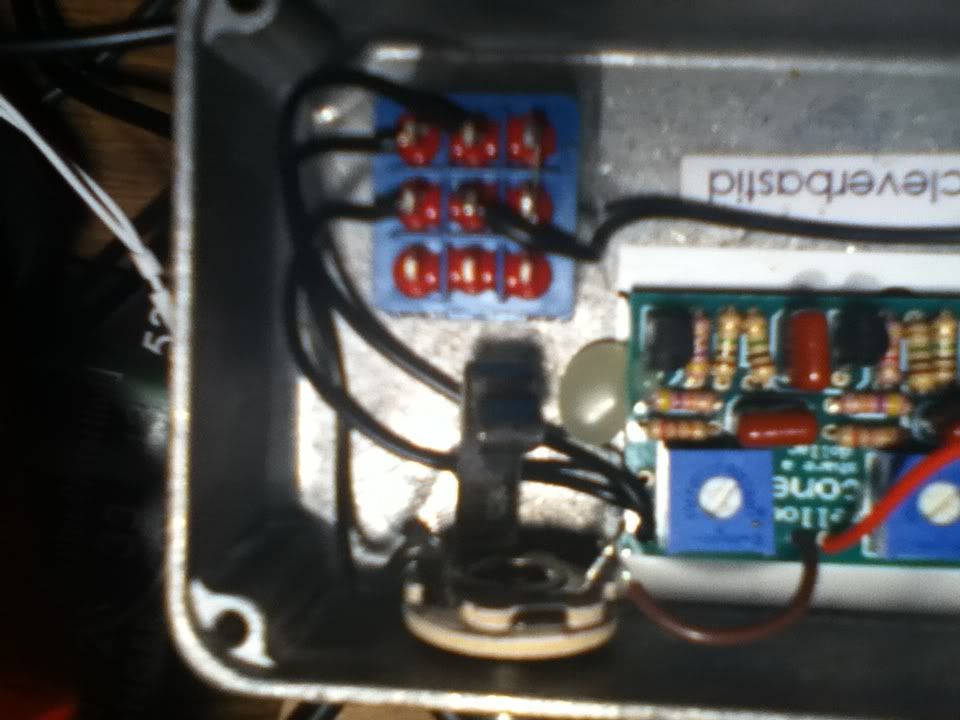
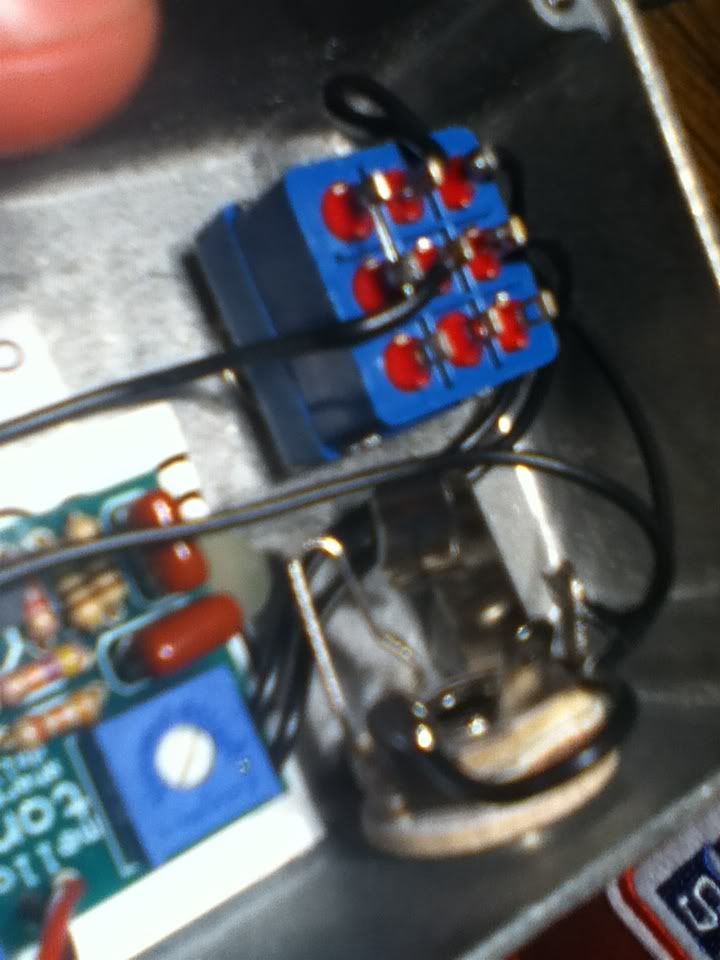
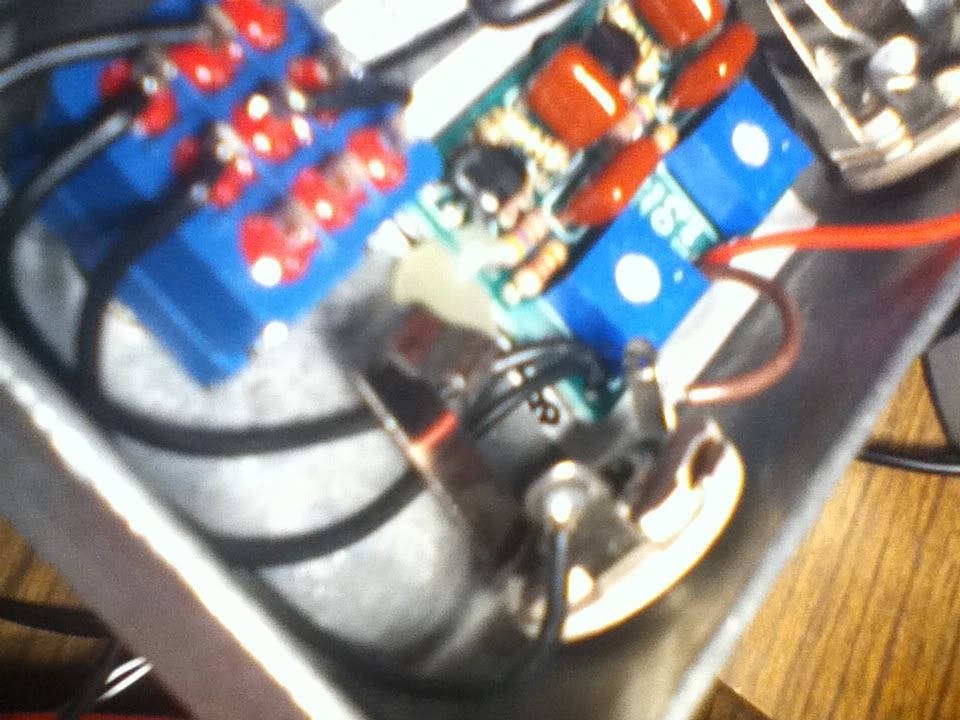
Hey guys, my roomates Clean chan/dirty chan won't bypass for some reason. Also if I only hit the clean chan side no sound is produced, yet if I hit dirty chan then I get guitar signal, and if I hit the clean side while the dirty is activated I get a boosted dirty signal.
so No sound when pedal is disengaged or if I engage clean only.
I compared the insides to my cc/dc and everything is identical. sorry for crappy ipod pics
Last edited by Psyre on Wed Jun 13, 2012 11:40 pm, edited 1 time in total.
that was the first thing I made sure of, stuck a small square of paper towel underneath it to make there was enough clearance. all the solder joints look extremely clean as well.
Have you messed with the trim pots at all? Is it possible that the level of the clean side might be low enough to not be audible by itself, but enough to slightly boost the dirty side when used in conjunction?
Looks like it is time for you to learn the ways of the mutlimeter on continuity setting. testing out the connection on the dirty chan bypass. It sounds like a joint on the bypass side of the DP/DT switch is the borked one.
McSpunckle wrote:Totally +1 adding a bit of solder to the joints on the footswitch. Sometimes a solder joint can look good and not work. How? I don't know.
It's especially bad with solid core wire. Sometimes the solder joint can break.
It's true, if there isn't enough solder on a joint, it's called a cold solder joint, in which there is some, but not enough solder to make a full connection. Also you want to make sure that the solder joints are dull, as apposed to being shinny.
McSpunckle wrote:Totally +1 adding a bit of solder to the joints on the footswitch. Sometimes a solder joint can look good and not work. How? I don't know.
It's especially bad with solid core wire. Sometimes the solder joint can break.
Also you want to make sure that the solder joints are dull, as apposed to being shinny.
The4455 wrote:Also you want to make sure that the solder joints are dull, as apposed to being shinny.
Are you sure about that?
I don't think he is
It's true, I'm not. I'm just remembering back to what I learned in my Digital electronics class, we didn't focus that much on soldering at all. But that's what it said in the soldering power point, but it sounded far fetched to me when I heard it as well. I wouldn't be surprised if it's wrong (which I'm assuming it is) because the class was more about digital electronics, hence the class name.
The4455 wrote:Also you want to make sure that the solder joints are dull, as apposed to being shinny.
Are you sure about that?
I don't think he is
I think first we'll have to find out the meaning of the word "apposed".
gosh
The4455, that class sounds interesting, what all did you guys do? As for the cold solder, the dull ones are typically the culprit. Side note, ROHS solder is somewhat dull looking regardless of a good/bad joint, in my experience.








 gosh
gosh