Page 1 of 1
Blending, and no, not the Fender one.
Posted: Fri Nov 06, 2009 1:58 am
by veteransdaypoppy
Okay, so everybody knows how they have those True Bypass/Flooper pedals where you click one switch and you can turn the signal to yer pedals on and off and if you click the other switch it sends them through a feedback loop... Well, what if I wanted to build something that was a True Bypass/Blend pedal, so that with the turn of a knob I could blend my clean signal with pedals hooked up to the FX loop in the box... is this possible? Scruffz, go!
Maybe you could even put it in a wah enclosure... and trip shit out.
I ask because I circuit bent one of those newer big-box Muffs and it's got this ridiculous static fizz crazy shit that goes on, which I like... But with the mid-scoop Muff bullshit I can't hear the guitar at all playing with the band, so if I could blend a clean signal in with that it'd probably come out perfect.. Or I could just experiment with nonsense blending and make awful noises.
Diagrams would help... if there are any. And if this could be a passive device I will be a very, very happy boy.
I hope I'm making sense, it's been a very long night for me.

Re: Blending, and no, not the Fender one.
Posted: Fri Nov 06, 2009 9:03 am
by bigchiefbc
When this comes up over at Talkbass, most people recommend the B Blender schematic. It's not passive tho. Here ya go:
http://seanm.ca/stomp/bblender.html
Re: Blending, and no, not the Fender one.
Posted: Thu Nov 12, 2009 6:26 pm
by moose23
Have a look at the bass paralooper as well. It also has a level control and a phase inversion switch.
http://moosapotamus.net/THINGS/paraloop.htm
Re: Blending, and no, not the Fender one.
Posted: Sat Nov 14, 2009 4:52 pm
by oinkbanana
I like to use a morley ABY pedal... one chain clean, one chain through dirt.... and then both of them into EB volume pan pedal
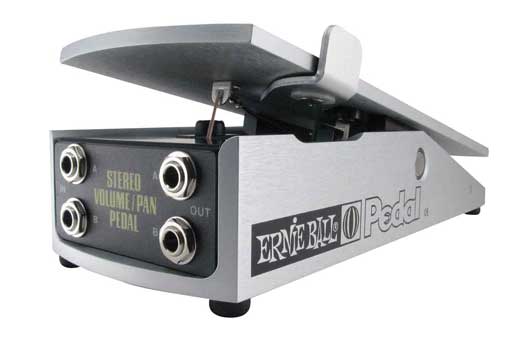
and then I can use the volume pedal to blend as desired.
Re: Blending, and no, not the Fender one.
Posted: Sat Nov 14, 2009 5:02 pm
by Scruffie
veteransdaypoppy wrote:Okay, so everybody knows how they have those True Bypass/Flooper pedals where you click one switch and you can turn the signal to yer pedals on and off and if you click the other switch it sends them through a feedback loop... Well, what if I wanted to build something that was a True Bypass/Blend pedal, so that with the turn of a knob I could blend my clean signal with pedals hooked up to the FX loop in the box... is this possible? Scruffz, go!
Maybe you could even put it in a wah enclosure... and trip shit out.
I ask because I circuit bent one of those newer big-box Muffs and it's got this ridiculous static fizz crazy shit that goes on, which I like... But with the mid-scoop Muff bullshit I can't hear the guitar at all playing with the band, so if I could blend a clean signal in with that it'd probably come out perfect.. Or I could just experiment with nonsense blending and make awful noises.
Diagrams would help... if there are any. And if this could be a passive device I will be a very, very happy boy.
I hope I'm making sense, it's been a very long night for me.
I see I was called upon, appologies for not showing up in the thread

Well if you want mids in the muff you can alter the tone stack to flatten the mid scoop out pretty easily, just replacing one or 2 parts, would that be any use to you? You could make it switchable if you wanted aswell (you've chosen a good time for Muff Mids, i'm just modding Roseweaves at the moment for them)
Some options for blending have been listed already though... they're probably the best simple option otherwise you're looking at building a circuit for it.
Re: Blending, and no, not the Fender one.
Posted: Wed Nov 18, 2009 3:07 am
by Superfuzz
It's big and clunky, but it does exactly what you're looking for
http://www.morleypedals.com/dfxb.htmlIf you do build something, I would recommend against a passive circuit, although I think it is possible. IMHO the best blending approach is to build an FX Loop that is run in parallel with a clean boost. This allows you to match levels much better, especially if you're working with blending a gain type pedal.