Forum rules
The DIY forum is for personal projects (things that are not for sale, not in production), info sharing, peer to peer assistance. No backdoor spamming (DIY posts that are actually advertisements for your business). No clones of in-production pedals. If you have concerns or questions, feel free to PM admin. Thanks so much!
IEatCats wrote:So, the oscillation is just the signal feeding back, and overloading the transistor? It's just a "feature" from running too much gain into a transistor, that it overloads and produces an oscillation, or is there any other concept in there I'm not grasping?
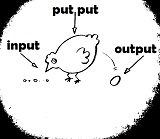
For oscillation with the Aenima, the output of the entire circuit is fed back to the input of the last gain stage/output of second gain stage. This means (some of) all that signal coming out the pedal will go back into the last transistor stage, which is boosting the regular signal, and REboosting the fed back signal. It will continue to do this as long as the connection is made. Thus sound explosion &/or overload. The general idea is to get signal coming out, to go back in, and then back out (aka feed back). So you can put them just about anywhere, if it follows that. Now, variations will occur based on placement in the circuit because of interactions with other components/filters/etc.
Oscillation in general: To get oscillation, the circuit has to fulfill two things: 1) The signal has to be boosted more, than it's damped- high gain circuit, boost is very high- point 1) checked. 2) The signal has to hold it's phase. Now that's a little more complicated to explain... Well, just take a normal sine wave that gets send into the circuit. The wave starts at 0, has it's peak at pi/2 and so on.. Now to get oscillation, the fed back output wave has to be on spot with the original wave (starting at 0, but not at 0.2 for example). A normal transistor amplifier (emitter circuit) has 180° of phase shift (inversion). Now you have to shift the wave back to get it on spot with the original signal. The "moving" of the wave is no problem. A simple high-pass filter or low-pass filter (a capacitor) or even a transistor causes a shift of the wave. So now that's out of the way- Ta Daaaa oscillation.
I hope that's not too complicated...
Last edited by Schlatte on Sun Jan 29, 2012 2:55 pm, edited 1 time in total.
Not at all. I've been trying to figure out oscillation for when my return comes in (going to start building a few designs I have in my head), and a small oscillator would be wonderful for testing. I'd rather understand the core concept, than go off a simple schematic, though. Thanks
maz91379 wrote:this board is really weird sometimes bros
Amissoteomb wrote:Modern technology makes the process of purchasing erection pills even simpler and swifter than before.
edited my half-assed explanation. Sorry, I mixed things up a little bit.
IEatCats wrote:Not at all. I've been trying to figure out oscillation for when my return comes in (going to start building a few designs I have in my head), and a small oscillator would be wonderful for testing. I'd rather understand the core concept, than go off a simple schematic, though. Thanks
You could try building a RC Phase shift oscillator to start. It's not very stable as far as frequency and amplitude go, but it's a basic circuit you can play with.
Jero wrote:I guess I understood it wrong. Nvrm what I said.
No, you're not wrong. It's kind of the function in this case, but I wrote a overview on oscillators in general. In case of the Aenima the last tranny phase-shifts the signal 180°, and it's an amplifier... ta daaa oscillator. so the two "@" signs mark the points you have to connect to get oscillation.
Whoa, now I totally feel like a noob. I'll try to get a video or something up. I switched the lugs on the pot for oscillation so it will oscillate when turned clockwise rather than oscillate at fully counter clockwise. However, this really shortened the range for oscillation as I am using a audio taper pot. I am going to try again this weekend with a lower value linear pot to see what happens. I'll keep you all posted. Thanks for all the great info!
DarkNDubby wrote:Whoa, now I totally feel like a noob. I'll try to get a video or something up. I switched the lugs on the pot for oscillation so it will oscillate when turned clockwise rather than oscillate at fully counter clockwise. However, this really shortened the range for oscillation as I am using a audio taper pot. I am going to try again this weekend with a lower value linear pot to see what happens. I'll keep you all posted. Thanks for all the great info!
How did you hook up the pot? It should function the exact same, just opposite direction.