echorec wrote:
I didn't love the demo, and I would agree it sounds fairly basic, but Arturia's first physical synth was the Origin---a digital synth that is most famous for crashing in mid-operation.
Damn, I never heard of it until now! Good to know, though.
*edit*
Oh shit, haha, I did know a little about this. Didn't reallize it predated the brutes. Bon Iver's origin has been sitting for sale in the local music store for like 3 years, I don't know if anyone's bothered to try it out.
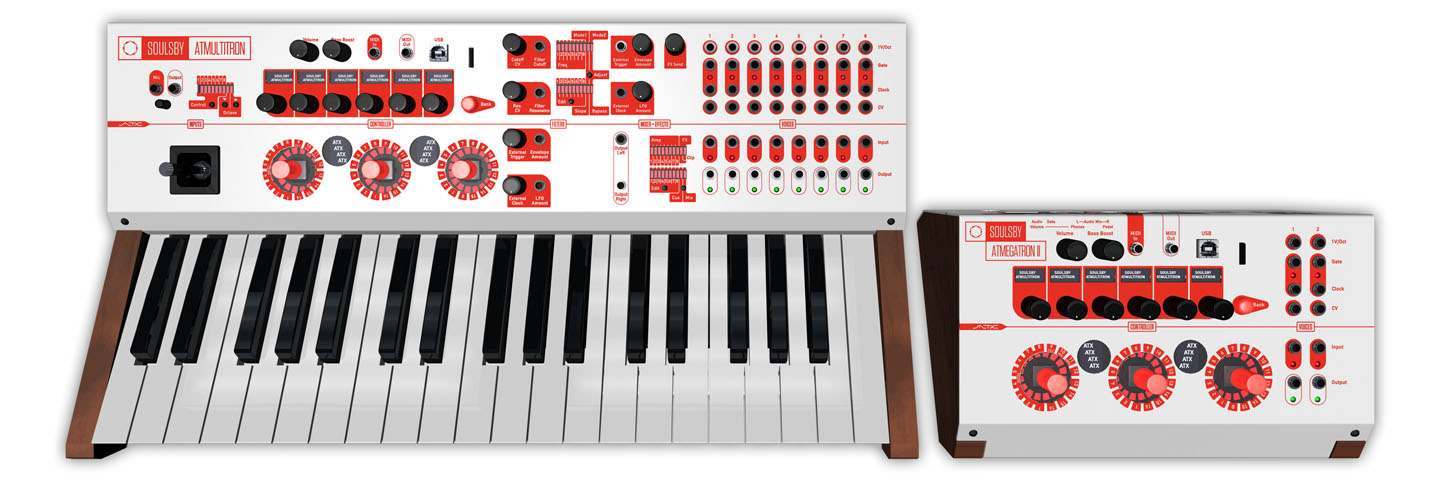
I saw that pic the other day, and thought, "Ahh sweet, an Origin & a Ghost Fax." ---In theory, the Origin seemed like an amazing endeavor, as you could mix & match your favorite vintage synths with up to 32 polyphonic voices, but unfortunately it seems they moved on to other stuff, without ever fixing the bugs.
Audio Damage have cemented themselves as the emperors of iOS synth apps, this one is going to be amazing.
10-voice granular does sound cool. I need to update iPads this summer. There's supposed to be a major upgrade for iVCS3 soon, and that's something I've wanted for a while.
Re: Winter NAMM / 2018 notes
Posted: Thu May 03, 2018 10:03 am
by Inconuucl
Same, some of the apps I use are starting to hint that they are dropping Air support, so that's my cue to upgrade.
Re: Winter NAMM / 2018 notes
Posted: Thu May 03, 2018 10:10 am
by echorec
There's a lot to absorb with the new Medusa. Here's some highlights. I'll be interested to hear it, when users get more comfortable with it.
*Three different play modes: monophonic, paraphonic x3, paraphonic x6.
*Choose any modulation parameter per pad for X and Y pressure axis.
*Advanced voice and sequence randomizer onboard.
*Three synchronizable analog oscillators with the choice of four classic wave types for each of them.
*One 24dB classic Dreadbox analog filter with three different types (2pole LP, 4pole LP, HP).
*FM frequency modulation separately for oscillators and filter.
*Noise generator with color shaping.
*Three wavetable digital oscillators.
*Audio input lets you use the power of Medusa with external audio sources.
*Second OLED screen to display all necessary synthesis data.
*Five independent and adjustable low-frequency oscillators with an extensive pool of parameters to control.
*Five independent, adjustable and loopable DADSR envelopes with a wide list of parameters to assign.
*Mixer for all seven paths of independent analog, digital and noise voices.
1983 is a polyphonic MIDI to CV interface with creative voice allocation and automatic tuning capabilities. There are 4 channels of CV and GATE outputs that can be used in various layouts such as hybrid splits between monophonic and polyphonic voices or velocity, CC, aftertouch, triggers, clock or reset.
Edgecutter is an ADSR envelope that shows you what it is doing. The beauty of this module is the line of LEDs showing you where the envelope is at. Allowing you to connect what you see with what you hear and getting more visible timing input from your system.